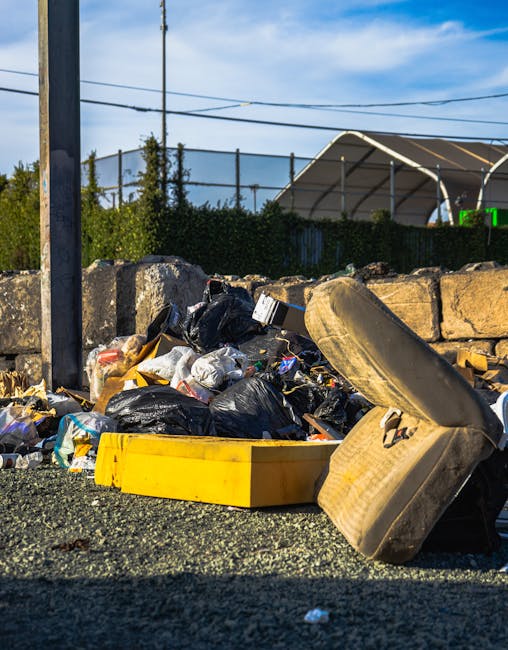
What to know about bulky rubbish permits near Chalk Farm Road
If you are dealing with a sofa, a broken wardrobe, old office furniture, or a pile of renovation waste, bulky rubbish can turn from "I'll sort it later" into a very real problem fast. Near Chalk Farm Road, space is tight, traffic is busy, and one badly planned collection can make a simple clear-out feel oddly stressful. This guide to What to know about bulky rubbish permits near Chalk Farm Road explains how permits usually fit into the process, when you may need one, what to check before booking, and how to avoid the usual headaches.
In practice, the right approach depends on what you are throwing away, where it is stored, and who is collecting it. Let's face it, nobody wants to discover at the last minute that a bulky item needs a different setup, a different vehicle, or extra handling. A little planning goes a long way.
Table of Contents
- Why What to know about bulky rubbish permits near Chalk Farm Road Matters
- How What to know about bulky rubbish permits near Chalk Farm Road Works
- Key Benefits and Practical Advantages
- Who This Is For and When It Makes Sense
- Step-by-Step Guidance
- Expert Tips for Better Results
- Common Mistakes to Avoid
- Tools, Resources and Recommendations
- Law, Compliance, Standards, or Best Practice
- Options, Methods, or Comparison Table
- Case Study or Real-World Example
- Practical Checklist
- Conclusion
- Frequently Asked Questions
Why What to know about bulky rubbish permits near Chalk Farm Road Matters
Bulky rubbish is not just "more rubbish". It is the awkward stuff: wardrobes, mattresses, broken desks, old appliances, exercise bikes you swear you will use again, and building debris that does not fit neatly into a normal bin. Around Chalk Farm Road, that matters because access can be tricky, loading space may be limited, and storage areas are often shared or tightly managed.
A permit or permission issue can come into play when a collection vehicle needs to stop in a restricted place, use a bay, or operate in a controlled area. Even if the waste itself is straightforward, the logistics often are not. That is the bit people forget. The waste is only half the story; the other half is how it is moved safely and lawfully.
There is also the practical side. A proper permit or pre-arranged collection can help prevent blocked entrances, avoid fines or complaints, and reduce the chance of waste being left behind because the vehicle could not access the property. In a busy London street, a few minutes of confusion can become a real nuisance. You will notice this especially if you are arranging a clear-out on a weekday, when traffic, residents, deliveries, and passing footfall all seem to happen at once.
Expert summary: If your bulky waste collection near Chalk Farm Road involves restricted access, controlled parking, or a managed building, check permissions early. The best collections are the boring ones - the kind that happen smoothly, without last-minute scrambling.
How What to know about bulky rubbish permits near Chalk Farm Road Works
At a basic level, the process usually involves three moving parts: the waste itself, the collection method, and the access arrangements. A permit is not always needed for every bulky waste job, but when it is required, it normally relates to parking, loading, or operating in a controlled zone rather than the waste item alone.
Here is the simple version. If a vehicle needs to pause in a restricted area to load bulky items, the operator may need approval or a permit of some sort. If the waste is being taken from inside a flat, office, or shared building, the people arranging the collection may also need to coordinate with building management or the property owner. In some cases, the collection provider handles this as part of the service. In others, you or your building manager may need to organise it.
The exact setup can vary depending on the type of waste and the property. For example, a small domestic sofa removal from ground level is very different from clearing large office furniture from an upper floor with narrow stairs. One is a quick lift-and-go job. The other may need extra labour, timing, and planning. Same postcode, different story.
It also helps to understand the difference between permission and collection. Permission is about access. Collection is about removing the waste. A company may be able to collect the items without issue, but if the vehicle cannot legally or practically stop nearby, the job becomes slower and more expensive. That is where people get caught out.
If you want to compare broader rubbish removal options before choosing a route, the general waste removal service overview is a useful place to start. For larger home clear-outs, the home clearance service can also help you think through what type of job you actually have on your hands.
Key Benefits and Practical Advantages
Getting the permit side right gives you more than peace of mind. It tends to save time, reduce stress, and make the collection more efficient from the start. That matters a lot when you are juggling residents, neighbours, delivery windows, or building rules.
- Smoother access: The crew can load items without holding up traffic or blocking entrances.
- Fewer delays: You are less likely to face a rescheduled collection because the vehicle could not stop legally.
- Lower disruption: This is especially helpful near busy roads, shared courtyards, and managed blocks.
- Better cost control: Clear access arrangements help avoid avoidable waiting time or extra handling.
- Less risk of complaints: Neighbours and building managers tend to appreciate an orderly process.
- Safer handling: Proper planning helps reduce lifting hazards and awkward manoeuvres.
There is a quieter benefit too: confidence. When you know the paperwork, access, and collection timing are under control, the whole job feels lighter. You stop second-guessing yourself every ten minutes. That alone is worth something.
For bulky furniture specifically, it can be useful to think ahead about whether the item can be dismantled, carried downstairs safely, or grouped with other pieces. If the waste includes sofas or bed frames, the dedicated mattress and sofa disposal page gives a sense of the practical handling involved. If you are clearing mixed items from multiple rooms, furniture clearance may be the more relevant route.
Who This Is For and When It Makes Sense
This topic is relevant to a wider group than many people expect. It is not just for landlords or builders. In and around Chalk Farm Road, bulky waste issues come up for households, small businesses, property managers, and even people moving out of a flat after a long tenancy.
Common situations where permits or access planning matter
- Flat clearances: Shared entrances, stairwells, and limited loading space can make access planning essential.
- Office clear-outs: Desks, chairs, filing cabinets, and old equipment often need timed collection.
- End-of-tenancy moves: When the move-out day is already stressful, bulky items add another layer.
- Renovation waste: Plasterboard, timber, doors, and stripped fittings can be awkward to move.
- Garden and outdoor items: Broken furniture, planters, and old tools can pile up faster than expected.
- Retail or hospitality fit-outs: Shops and venues often need quick removal without getting in the way of customers.
It makes sense to think about permits when the item is too large for a standard bin collection, when access is constrained, or when the waste will need to be loaded from a location with parking controls. If that sounds vague, that is because real-world jobs often are a bit messy. One sofa in a ground-floor hall? Easy. Three cupboards, a fridge, and a stack of packaging from a refurb? Different game.
If your bulky item includes an appliance, the fridge and appliance removal service page is relevant because white goods are often handled differently from general furniture. For garage clutter or mixed household overspill, garage clearance can fit the job better than trying to treat it as simple bin waste.
Step-by-Step Guidance
If you want a low-stress collection near Chalk Farm Road, work through the process in order. Small decisions early on usually prevent the annoying bits later. Here is a practical route.
- Identify exactly what needs removing. Separate furniture, appliances, DIY waste, and anything hazardous. A mixed pile can change the way the job is handled.
- Check access points. Look at entrances, stairwells, lifts, parking, turning space, and any restrictions on stopping nearby.
- Ask whether a permit or permission is needed. This could relate to parking, loading, or building access. If the collection is near a controlled bay or managed property, do not assume it is fine.
- Measure large items. A tape measure saves guesswork. That old wardrobe may not be as "manageable" as it looked in the bedroom.
- Choose the right service. Pick a service that matches the waste type, access conditions, and timing you need.
- Book with clear details. Share item types, floor level, parking conditions, and any building rules upfront.
- Prepare the items. Disconnect safely, empty drawers, bag loose pieces, and clear a path if you can.
- Confirm timings and contact details. A quick confirmation helps avoid confusion on the day.
On the day itself, keep the route to the items clear and, if possible, label what is going and what is staying. It sounds basic, but in a cluttered hall or basement, basic is your best friend. Truth be told, the simplest collections are the ones where nobody has to ask, "Is this one staying or going?" three times.
If you are booking online, the book online page can be a practical starting point for arranging a collection when you already know what needs removing. If you are still comparing costs or trying to understand what affects pricing, the pricing and quotes page is worth a look.
Expert Tips for Better Results
Most bulky rubbish problems are not dramatic. They are usually a chain of small oversights. A missing measurement, a forgotten parking restriction, a sofa that will not fit through the doorway - that kind of thing. The fix is usually straightforward once you know what to look for.
- Group items by type before the crew arrives. It helps the job move faster and makes decision-making simpler.
- Separate anything potentially hazardous. Paint tins, solvents, batteries, and similar items should never be casually mixed with general bulky waste.
- Think about dismantling. Removing legs, doors, or shelving can turn a tight fit into a manageable lift.
- Take photos of awkward items. A few pictures sent in advance can prevent misunderstandings.
- Check building rules early. Some properties have loading restrictions or booked slot systems that are easy to overlook.
- Plan for noise and timing. Early mornings, school runs, or resident peak times can all affect the best collection window.
A small tip from real life: if something looks borderline too big, assume it is too big until proven otherwise. That saves more hassle than optimism ever will. Also, if you have a couple of items that feel very different from the rest, mention them separately. A fridge is not just "another bit of furniture", and a soaked mattress is not the same as a dry one.
For business settings, the business waste removal service may be a better fit than a general household collection. If the job involves an office floor, boardroom furniture, or old storage units, the office clearance page is more relevant again.
Common Mistakes to Avoid
People usually make the same handful of mistakes, and most of them are avoidable with a little preparation. The awkward part is that the mistake often only becomes obvious when the vehicle is already outside. Not ideal.
- Assuming no permit is needed. If the collection involves a restricted bay or managed access point, check first.
- Underestimating the size of the items. Bulky rubbish often looks smaller in a room than it does in a doorway.
- Mixing hazardous waste with general bulky items. That can create compliance and safety problems.
- Leaving the booking details vague. "A few bits" is not enough if you want an accurate plan.
- Forgetting building management or neighbours. In shared properties, communication matters more than people think.
- Not sorting reusable items. If something can be reused, repurposed, or donated, it is worth separating early.
One of the easiest ways to avoid trouble is to treat the collection like a mini project. Nothing fancy. Just a quick list, a few photos, and a check on access. It does not need a spreadsheet. Unless you are that kind of person, in which case, carry on.
If your waste includes renovation leftovers, take a look at builders waste clearance and the guidance on what can go in a skip to avoid mixing unsuitable materials with general bulky rubbish. For items that are still usable, recycling and sustainability is a good mindset to keep in view.
Tools, Resources and Recommendations
You do not need specialist equipment for every collection, but a few everyday tools can make the process much easier.
- Tape measure: Essential for checking furniture, lift doors, and stair widths.
- Phone camera: Photos help you explain item size, access issues, and the general state of the load.
- Basic labels or tape: Handy for marking items that are to stay or go.
- Work gloves: Useful for safe handling, especially if items have splinters or rough edges.
- Screwdriver or hex keys: Good for dismantling furniture before removal.
- Bin bags or rubble sacks: Helpful for loose fittings, fixings, and smaller debris.
When choosing a removal service, look for clear information about access, item types, handling safety, and recycling practices. If the company explains how it manages fragile access, heavy lifting, or mixed loads, that is usually a good sign. You want calm competence, not big promises and then a scramble on the day.
The pages on insurance and safety and health and safety policy are useful if you want to understand the standards a professional operator should follow. For people who care about responsible disposal routes, recycling and sustainability is also a strong indicator of good practice.
Law, Compliance, Standards, or Best Practice
Bulky rubbish removals in London should be approached with care because waste handling, parking, loading, and duty of care all matter. The exact legal or permit requirements can vary depending on the location, property type, and waste category, so it is wise not to rely on guesswork. That is especially true around busy roads and controlled parking areas.
In practical terms, the main compliance points to think about are:
- Parking and loading permission: If a vehicle needs to stop in a restricted area, permission or a permit may be needed.
- Waste classification: General bulky waste is not the same as electricals, appliances, or hazardous materials.
- Duty of care: Waste should go to the right place through a responsible route, not simply disappear from sight.
- Property rules: Managed buildings may require advance notice or approval for collections.
- Safe manual handling: Large items should be moved with appropriate care to avoid injury or damage.
Best practice is to confirm arrangements before collection day, keep written booking details where possible, and be open about anything unusual. If something contains sharp edges, liquids, or electrical components, say so. It saves everyone trouble. The honest answer is usually the best one.
For people wanting a more business-focused route, the guidance on Camden Council rules for commercial rubbish disposal NW1 may be especially relevant in understanding how local compliance can affect collection planning. And if you are handling confidential materials alongside bulky waste, confidential shredding is a separate service worth keeping distinct from the general waste stream.
Options, Methods, or Comparison Table
There is more than one way to deal with bulky rubbish near Chalk Farm Road. The right option depends on volume, access, timing, and what you are actually clearing. Here is a straightforward comparison.
| Method | Best for | Pros | Watch-outs |
|---|---|---|---|
| One-off bulky waste collection | A few large items from a home or flat | Quick, convenient, minimal disruption | Access and parking still need planning |
| Full clearance service | Multiple rooms, offices, or mixed loads | Good for bigger jobs and time pressure | Needs better item sorting and clearer briefing |
| Skip-based approach | DIY or ongoing project waste | Useful for repeated loading | Space, permits, and what can go in it must be checked carefully |
| Specialist item removal | Appliances, mattresses, sofas, or hazardous items | Handled with the right equipment and route | May not suit mixed bulky waste on its own |
If you are unsure which path is right, think about the shape of the job rather than the label. A single heavy item may need specialist handling, while a whole flat's worth of furniture might be better treated as a clearance. The wrong method is usually the expensive one.
For readers comparing furniture-related options, the dedicated pages for furniture disposal, flat clearance, and house clearance can help you match the service to the job.
Case Study or Real-World Example
Picture a tenant moving out of a flat not far from Chalk Farm Road on a Friday afternoon. The flat has a heavy wardrobe, a mattress, a small table, and a broken office chair. Nothing outrageous. But the building has a narrow entrance, there is limited roadside stopping space, and the lift is booked by other residents around the same time.
The first instinct might be to leave it until move-out day and "sort it then". That is where the stress starts. In a better version of the same story, the tenant checks the item sizes, confirms building access with management, and books a removal slot that lines up with the best loading window. The bulky items are grouped near the door, the route is kept clear, and the collection is done without any last-minute drama. Simple, honestly.
What made the difference? Not magic. Just preparation. The awkward bit is that bulky rubbish rarely causes problems because of the rubbish itself. It causes problems because the access, timing, and permissions were not thought through.
That kind of planning also makes recycling and re-use easier. If some furniture is in reasonable condition, it may be kept separate from damaged items. If you are dealing with odd mixed pieces after a move, the furniture clearance and house clearance services are useful reference points for shaping the job sensibly.
Practical Checklist
Use this checklist before collection day. It is basic, but the basic stuff saves the day.
- Confirm exactly which items are being removed
- Measure the largest items and the access route
- Check whether parking or loading permission is needed
- Tell the collection provider about stairs, lifts, or tight entrances
- Separate hazardous items from general bulky waste
- Label items if there are objects that must stay
- Clear a path from the waste to the exit
- Keep contact details handy on the day
- Ask about recycling or reuse where relevant
- Double-check timing, especially if the street is busy
One small reminder: if the waste includes soft furnishings, appliances, or mixed clear-out items, check whether they need different handling. A quick check now is far better than a last-minute shuffle outside the building in the cold. Nobody enjoys that. Nobody.
For anyone planning a mixed collection, the pages on garden clearance, loft clearance, and garage clearance can help you think through different bulky waste scenarios before you book.
Conclusion
What to know about bulky rubbish permits near Chalk Farm Road comes down to this: check access early, understand whether permissions are needed, match the collection method to the waste, and keep the practical details clear from the start. That is the difference between a straightforward clear-out and a day full of avoidable friction.
When you plan properly, bulky rubbish stops being a headache and becomes just another job crossed off the list. And there is a real comfort in that, especially in a busy part of London where time, space, and patience are all in limited supply.
Get a free quote today and see how much you can save.
If you are ready to move ahead, choose the option that best fits your items, your access, and your timing. A calm, well-organised collection is not glamorous, but it is a relief. And sometimes, that is exactly what you need.
Frequently Asked Questions
Do I always need a permit for bulky rubbish near Chalk Farm Road?
Not always. A permit is usually tied to parking, loading, or controlled access rather than the bulky rubbish itself. If the collection vehicle needs to stop in a restricted place, check the rules before the day arrives.
What counts as bulky rubbish?
Bulky rubbish is usually large household or business waste that does not fit into a standard bin collection, such as sofas, wardrobes, mattresses, desks, and large appliances.
Who arranges the permit if one is needed?
That depends on the setup. Sometimes the removal provider arranges it, sometimes the property manager does, and sometimes the person booking the collection needs to confirm access permissions. It is worth asking early.
Can I leave bulky items outside my property before collection?
Only if it is allowed and safe to do so. In some locations, leaving items out early can cause obstruction, complaints, or a breach of building rules. Check first.
How do I know whether my items need special handling?
If the waste includes appliances, sharp materials, liquids, batteries, or anything hazardous, it may need separate handling. When in doubt, describe the item clearly before booking.
Is a skip better than a bulky waste collection?
It depends on the job. A skip can suit ongoing DIY or larger volumes, but it needs space and, in some cases, permission. A one-off bulky collection is often simpler for a few large items.
What if my building has a narrow entrance or stairs?
Tell the provider in advance. Narrow access can affect the crew size, the timing, and whether items need dismantling first. It is one of the most important details to share.
Can bulky furniture be reused or recycled?
Often, yes. If items are in good condition, they may be suitable for reuse. Damaged items may still be recyclable depending on the material and local handling route.
How far in advance should I book a collection?
As early as you can, especially if access is tight or the collection needs to fit around building rules or busy street conditions. A little notice makes a big difference.
What should I do with mattresses, sofas, and appliances?
Those items can sometimes need specific collection methods because they are bulky and may contain different materials. Use the relevant service type rather than assuming they will be handled like general waste.
What if I am removing bulky waste from an office rather than a home?
Office waste can involve desks, chairs, storage units, and sometimes confidential materials or electronics. In that case, an office-focused service is often the better fit.
How do I avoid extra charges?
Give accurate details, measure large items, mention access restrictions, and be clear about what is being removed. Most avoidable costs come from surprises on the day, not from the waste itself.
Can I mix general rubbish with bulky items?
Sometimes mixed loads are fine, but hazardous waste, electricals, and certain construction materials may need separate handling. It is safer to sort by type before booking.
Is there a simple rule of thumb for getting this right?
Yes: if the item is large, awkward, or hard to access, do not leave the plan vague. Measure it, describe it, and check access before collection day. That simple habit saves a lot of bother.