 Commercial Waste Camden Town sits at the heart of a busy London neighbourhood where sustainability is not an add-on but a core operational value. Local businesses, market traders and property managers all contribute to an eco-friendly waste disposal area that supports the borough's wider ambitions. By treating the Camden Town commercial landscape as a shared resource, our approach to commercial waste in Camden Town emphasises prevention, reuse and high-quality recycling so that what was once rubbish becomes a resource for the local circular economy.
Recycling and Sustainability for Commercial Waste Camden Town
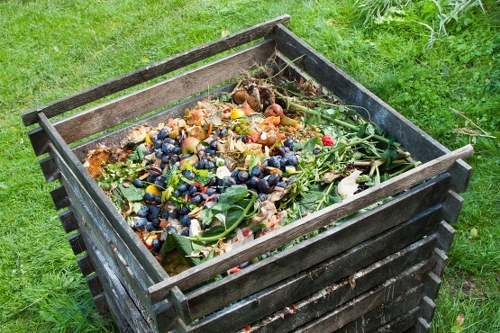 Our formal target for the coming five years is to reach a 65% recycling percentage target for business and commercial waste streams across Camden Town, with interim targets of 50% within two years. This ambition aligns with borough-wide policies on waste separation and mirrors the Camden approach to waste separation that encourages businesses to segregate: dry recyclables (paper, cardboard, plastics), glass, food and organic waste, textiles and specialist streams such as e-waste and bulky items. Achieving these targets requires collaboration across collections, on-site segregation, and investment in infrastructure that supports a sustainable rubbish area rather than a single skip-and-forget mindset.
Local infrastructure: transfer stations and processing hubs
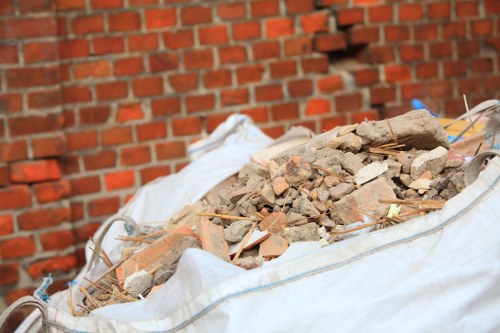 Camden Town's proximity to North London processing hubs means shorter haul distances and faster turnaround for separated loads. We route separated commercial waste to local transfer stations and materials recovery facilities that specialise in high-grade sorting, composting of organics and safe treatment of hazardous fractions. Key local infrastructure elements include:
- Efficient transfer stations serving central and north London, reducing vehicle miles and idle time
- Materials Recovery Facilities (MRFs) that accept commercial dry recyclables with improved contamination controls
- Composting and anaerobic digestion facilities for food and organic waste from restaurants and catered events in the Camden area
Working closely with these hubs allows Camden Town commercial waste services to maintain a lower carbon footprint while improving material capture rates. The borough’s approach to waste separation at source means fewer mixed-load penalties and greater value recovered from commodities such as cardboard, glass, and metals.
Partnerships with charities and social enterprises form a central pillar of Camden Town's sustainable rubbish area strategy. Rather than consigning usable furniture, fixtures or electronics to landfill, the Camden commercial network redirects items to local reuse partners, community organisations and accredited charities that refurbish goods and deliver them to vulnerable households. Our standard practices include:
Charity partnerships:
- Redirecting usable office furniture and shop fixtures to community reuse projects
- Supporting textile collection schemes and clothing banks to prolong garment life
- Donating working electrical items to repair cafes and electronic refurbishment charities
These collaborations not only reduce landfill but also create social value—providing affordable goods and training opportunities while reducing the embodied carbon of new purchases.
Low-carbon fleet and operational efficiency
 A low-emission vehicle fleet is essential for an eco-friendly waste disposal area in a dense urban setting like Camden Town. We deploy a mix of electric vans, low-emission Euro-6 vehicles and, where appropriate, cargo bikes and micro-collection units for narrow streets and pedestrian zones. Route optimisation software further reduces mileage and idling time, and preventive maintenance keeps the fleet operating at peak efficiency. The combined effect is a measurable reduction in CO2 and NOx emissions from commercial waste collections.
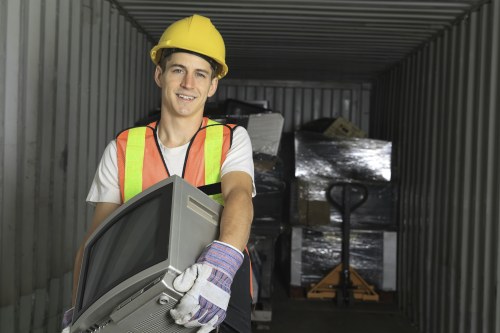 Beyond vehicles, operational measures help deliver real sustainability outcomes: consolidated pickups for high-density commercial corridors, scheduled off-peak collections to reduce congestion, and container standardisation to improve segregation at source. We encourage businesses to adopt on-site measures—compactors for cardboard, dedicated food waste bins for cafes and restaurants, and clearly labelled recycling stations for retail units—so that fewer materials are lost to contamination.
Monitoring, reporting and continuous improvement are built into the Camden Town commercial waste programme. Regular data on tonnages, contamination rates and diversion percentages helps managers and business owners see progress against the recycling percentage target. Annual sustainability reports and transparent metrics allow stakeholders to track reductions in greenhouse gas emissions, increases in reuse and recycling, and improvements in the quality of recyclables sent to market. Strong governance, tied to community benefits and charity partnerships, ensures long-term buy-in from businesses across the borough.
To maintain momentum within this sustainable rubbish area, we promote best-practice measures such as staff training on segregation, collaborative procurement for recycled-content materials and incentives for waste reduction at source. The Camden Town commercial waste ecosystem benefits when shops, offices and hospitality venues work together to reduce waste generation, improve separation and support local transfer stations and charities that keep materials in use.
In summary, Camden Town's commercial rubbish area strategy combines ambitious recycling targets, efficient local transfer stations, solid partnerships with reuse organisations and a low-carbon fleet to deliver a resilient, circular approach. By integrating borough-led waste separation standards, investing in infrastructure and championing social value through charity reuse, the area is setting a practical example of how urban commercial zones can become models of sustainability and resource efficiency.
Businesses and property managers in Camden Town are invited to join this collective effort—adopt segregation practices, route material to reuse partners and support a low-carbon collection model so our local commercial waste service continues to be both environmentally responsible and economically sensible.
